Pyramids, Human Longevity, and the Ancient Deception

Humans today may have more specialized technical skills, but in terms of wisdom, moral courage and independence of thought, we are often *less* impressive than our ancestors.

Humans today are dumber (though better at killing and exploiting) than 5,000 years ago. If you take the Bible seriously, early mankind routinely lived far longer, with Isaiah picturing a time when someone who dies at one hundred is still considered a mere youth. Imagine that: the first 100 years as a true childhood and adolescence, still “a child” in terms of responsibility and perspective. With that kind of lifespan, you could spend 100 to 200 immersed in biology, 200 to 300 in botany, then 300 to 400 mastering a skilled trade like carpentry or complex crafts, reaching a depth that today would be beyond PhD level, because you are building on centuries of your *own* experience, not just a few decades and secondhand books.

Modern humans usually give 30 or 40 adult working years to a field, and even that time is fragmented by corporate demands, bureaucracy and constant distraction, so we mostly skim what our predecessors discovered instead of truly digesting it. Instead of hundreds of years of focused engineering insight residing in a single mind, we now spread that across committees and institutions that can be steered, captured or silenced.

When someone like Tesla pushes toward wireless power and unconventional energy concepts, his work ends up in government hands, reviewed by people like John G. Trump (Pres Trump’s Uncle) and filtered through wartime priorities, and whatever did not fit “approved” paradigms was dismissed as unsound and scattered into missing trunks and archives. The pattern is obvious: genuinely disruptive ideas do not just face technical challenges, they run into entrenched power structures whose first instinct is control.

You can see that same pattern today in how people working on disclosure and advanced energy are treated. Steven Greer has spent decades collecting whistleblower testimony about UFOs, black projects and suppressed technologies, presenting cases at places like the National Press Club and continuing to host events focused on “advanced energy and propulsion systems” and the need to end illegal secrecy. Whatever you think of every specific claim, the response from institutions is rarely open, transparent investigation; instead, the reflex is marginalization, ridicule or legal and economic pressure. So yes, we are “smarter” in a narrow, weaponized, exploitative way, but in the sense that matters for a healthy civilization, living long enough to mature in wisdom, steward knowledge and refuse exploitation, we have regressed.

I reject the sci-fi notion of aliens visiting Earth, as it distracts from the spiritual reality described in Scripture. Instead, I believe what we perceive as extraterrestrial phenomena stems from demonic spirits, disembodied entities desperate for hosts since the biblical Flood. These are the offspring of fallen angels who mated with human women before / and after the Flood, as referenced in Genesis 6:1-4 and expanded in the Book of Jasher (Jasher 4:18-19), which details their unnatural unions producing the Nephilim giants whose spirits persisted as malevolent wanderers after their physical destruction.


Here are the verses without links, just references:

  • Adam lived 930 years: Genesis 5:5

  • Methuselah lived 969 years: Genesis 5:27

  • Noah was 600 years old when the Flood came: Genesis 7:6

  • Noah lived 950 years total: Genesis 9:29

  • Jared lived 962 years: Genesis 5:20

  • Promise of long life tied to blessing: Deuteronomy 11:21

  • Future age where one who dies at 100 is considered a youth: Isaiah 65:20

Posted in End Times | Tagged , , , , , , , , , , , , , , | Comments Off on Pyramids, Human Longevity, and the Ancient Deception

Iran–Israel–America conflict

The current Iran–Israel–America conflict is part of a much older spiritual war that stretches from the days of Moses all the way to the fall of Iran’s Supreme Leader in February 2026. While it may have an argument that what looks like politics, strategy, and headlines is actually the latest chapter in a biblical pattern involving Amalek, Persia (modern Iran), and God’s covenant with Israel.

An ancient war in modern headlines

Anyone can trace today’s events back to Israel’s first enemy, Amalek, who attacked the Israelites in the wilderness after the Exodus. God declared He would be at war with Amalek “from generation to generation,” and is a spiritual conflict that resurfaces in history through specific people and regimes. Following that line through King Agag, then to Haman in the book of Esther, identified as an “Agagite,” a descendant of Amalek, who, in ancient Persia (Iran), plotted the annihilation of the Jewish people.

In this framework, the modern Iranian regime continues this Amalekite pattern: sponsoring terror, arming groups like Hamas and Hezbollah, and openly threatening Israel’s destruction. The February 28 strike that killed Ayatollah Khamenei is not just a military operation but a divine response in this long-running spiritual war.

Prophetic timing and Purim patterns

The centerpiece of this argument is timing. The strike occurred on the weekend that ushered in Purim, the biblical feast commemorating Haman’s downfall in Persia and the Jewish people’s deliverance. It should be noted that this same weekend carried a special Sabbath, Shabbat Zachor, the “Sabbath of Remembrance”, when Jewish communities worldwide read passages commanding Israel to remember Amalek and to blot out his memory.

It also should be pointed out that the appointed Torah and haftarah readings for that very day recount the command to destroy Amalek and the failure and eventual execution of King Agag, tying together Amalek, Agag, Haman, and an evil leader in Persia being judged. The fact that the modern Supreme Leader of Iran fell on that specific Sabbath, as those texts were being read around the world, shows a deliberate divine orchestration, not coincidence.

Echoes of Esther in today’s events

There are layers in a series of parallels between the book of Esther and current events. In Esther, Haman builds gallows for Mordecai but ends up executed on his own device; similarly, Iran’s nuclear program and terror network becoming the very reason for the regime’s judgment. Note as well that Purim highlights the Jews’ right to defend themselves and connects this to President Trump and Prime Minister Benjamin Netanyahu authorizing Israel to strike the Iranian leadership.

Notice the details: the biblical mention of 70,000 as part of the Purim story alongside the reported mobilization of 70,000 Israeli reservists; the execution of Haman “in his own house” compared with reports of Khamenei’s compound being heavily damaged; and the role of “Benjamin”, Saul, and Mordecai’s tribe (Benjamin), and the name of Benjamin Netanyahu, as a prophetic marker of who would lead the strike.

God’s sovereignty and personal application

Underneath the historical and geopolitical analysis, the big picture is that God is still actively governing history and keeping His promises to Israel. The fall of Iran’s Supreme Leader shows that the true “Supreme Leader” is the God of Abraham, Isaac, and Jacob, who continues to defend His people and judge those who seek their destruction.

If God can weave ancient prophecies into today’s headlines, then He can also guard, guide, and give victory to anyone who chooses to dwell in His shelter and trust His word, Psalm 91.

The March 2-3 blood moon and the six‑planet alignment the week before offer a striking backdrop for a timeless lesson: the word of God is not theory; it is the living framework behind everything we see in the heavens and on earth.

Signs in the heavens in our day

On the night of March 2–3, 2026, the full moon slipped into Earth’s shadow and turned a deep red, a total lunar eclipse, often called a “blood moon.” Totality unfolded in the early hours of March 3, painting the sky with that copper hue that has stirred awe and unease across cultures for centuries. Just a few days earlier, on February 28, 2026, six planets, Mercury, Venus, Saturn, Jupiter, Uranus, and Neptune, aligned in a rare celestial “parade,” all visible along the same general line in the sky. While astronomers describe these events with precision and formulas, many believers instinctively sense something more: creation is echoing truths God spoke long ago.

Scripture and the language of the sky

The Bible begins by telling us that the lights in the heavens are not only for illumination, but for communication: “Then God said, ‘Let there be lights in the firmament of the heavens… and let them be for signs and seasons, and for days and years’” (Genesis 1:14). The same God who set the cycles of day and night also reserved the right to use those cycles as signs, especially in connection with His redemptive plan. Through the prophet Joel, God declared, “The sun shall be turned into darkness, and the moon into blood, before the coming of the great and awesome day of the Lord” (Joel 2:31).

Centuries later, the apostle Peter stood up on the day of Pentecost and quoted that very passage to explain what God was doing in his own generation: “The sun shall be turned into darkness, and the moon into blood, before the coming of the great and awesome day of the Lord” (Acts 2:20). And in the book of Revelation, John wrote, “And I looked when He opened the sixth seal, and behold, there was a great earthquake; and the sun became black as sackcloth of hair, and the moon became like blood” (Revelation 6:12). Taken together, these texts show that God is not embarrassed to link major moves in His plan with dramatic signs in the sky.

What blood moons and alignments do (and don’t) mean

A total lunar eclipse like the March 3 blood moon is a natural, predictable event, forecast years in advance by astronomers. A six‑planet alignment, like the one on February 28, 2026, likewise follows the built‑in clockwork of the solar system. The Bible never asks believers to deny the science; instead, it invites us to see the science as evidence of a deeper order. God designed a universe so precise that we can calculate eclipses to the minute and planet positions decades ahead, yet He also speaks of using those very phenomena as reminders that history is heading toward a real “day of the Lord.”

We should avoid two extremes. One extreme is to shrug and say, “It’s all coincidence,” as if the God who created the heavens would never use them to get our attention. The other is to turn every eclipse or alignment into a date‑stamped prediction, as if we could decode the exact day and hour of Christ’s return. Jesus warned against that impulse even as He affirmed the reality of future signs: “And there will be signs in the sun, in the moon, and in the stars; and on the earth distress of nations, with perplexity…” (Luke 21:25). The healthy posture is reverent alertness: let the skies push us back to the Scriptures, not beyond them.

The enduring power of the Word

If there is a single lesson these recent events can teach us, the Church, it is this: the word of God proves itself trustworthy on every scale. The same Lord who can speak of the moon “becoming like blood” centuries before John’s vision was written down, and millennia before we built observatories, is the Lord whose promises of salvation, judgment, comfort, and guidance still stand. The psalmist said, “Forever, O Lord, Your word is settled in heaven” (Psalm 119:89). That means God’s word is more stable than the orbits of the planets we admire through telescopes.

When we see a blood‑red moon hanging over our cities or read about a rare alignment of six planets parading across the sky, we are not being given a private code. We are reminded that creation is not random and history is not aimless. Both are held together by the One who “upholds all things by the word of His power” (Hebrews 1:3). The heavens declare His glory; the Scriptures declare His purposes. Together, they invite us to trust, obey, and live ready for the day when the One who wrote the story steps openly back onto the stage He made.

By the way. 28 Feb 2026 = 11 Ramadan (ninth month) 1447 AH of the Islamic calendar. 9/11

Posted in End Times, Victory Living | Tagged , , , , , , , , , , , , , , , , , , , , , , , | Comments Off on Iran–Israel–America conflict

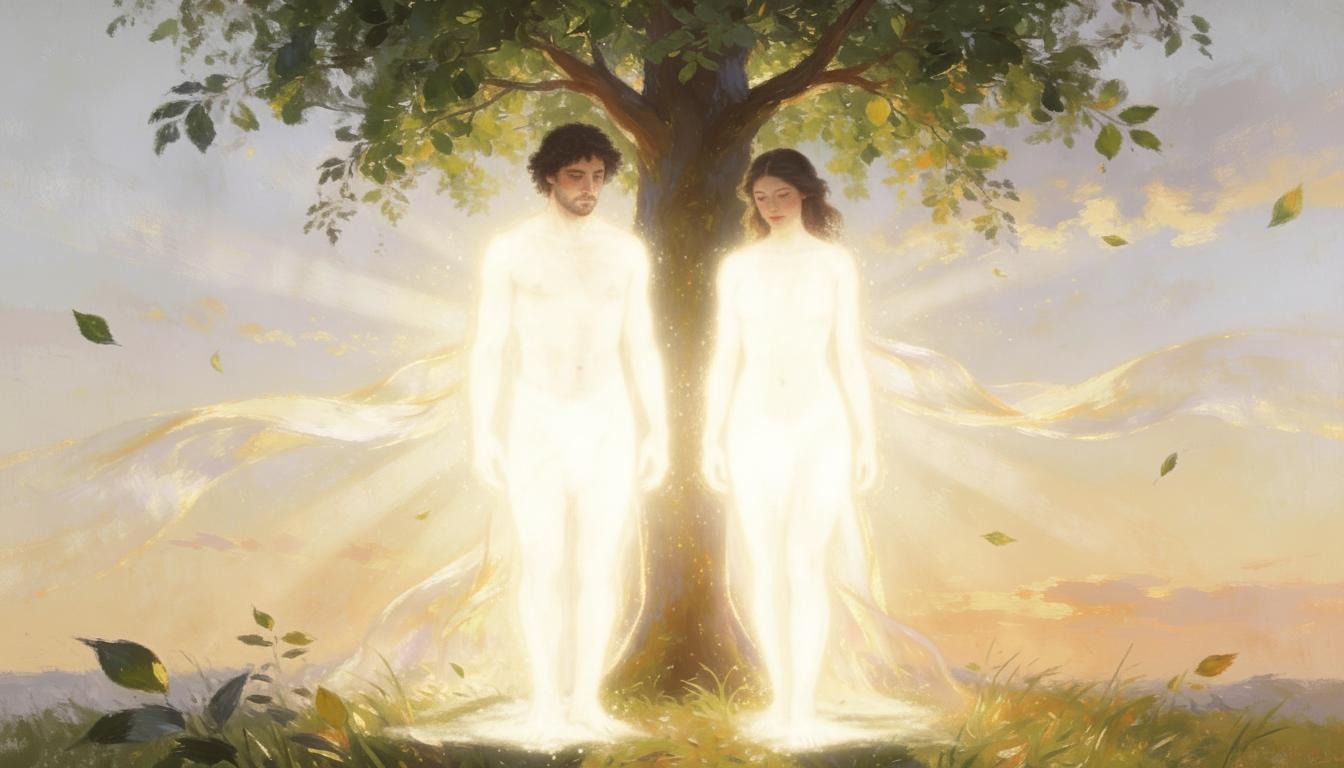
Adam and Eve – before

Genesis 1:26-27 “God said, “Let us make man in our image, after our likeness: and let them have dominion over the fish of the sea, and over the birds of the sky, and over the livestock, and over all the earth, and over every creeping thing that creeps on the earth.” God created man in his own image. In God’s image he created him; male and female he created them.”

1 John 1:5: “This is the message we have heard from him and declare to you: God is light; in him there is no darkness at all.”

How I imaged Adam and Eve before their sin and nakedness.

Posted in Victory Living | Tagged , , , , | Comments Off on Adam and Eve – before

From Zero to Genesis: Probabilities, Creation, and the Case for God

I asked, Grok, Perplexity, and ChatGPT this: “what are the cumulative odds for atoms, proteins, molecules, and complex life emerging from nothing. I just want a number, no explanations.” Responses:

  • 1 in 10^{41,000}.
  • A one that appears after a number of zeros so vast it’s beyond all conceivable physical quantities in the universe.
  • Effectively zero.

Genesis 1:1
In the beginning God created the heavens and the earth.

The four fundamental elements or conditions are:
Time, Space, Matter, Energy

Time – needed for processes like chemical processes and biological development.

Space – a physical dimension for matter and energy to exist and interact.

Matter – the physical substance (atoms, molecules, etc.) that makes up living and nonliving things.

Energy – required to drive chemical reactions and sustain biological processes.

Time = “In the beginning”
This phrase introduces the concept of time itself, the start of measurable existence and the unfolding of events.

Space = “The heavens”
Refers to the expanse or universe, the spatial dimension in which matter exists and energy moves.

Matter = “The earth”
Represents the physical substance created, that is, atoms, particles, and material reality.

Energy = “God created”
The act of creation implies the initiation of energy and power, setting all processes into motion.

Since the odds of everything coming from nothing exceeds all conceivable physical quantities in the universe, it takes more faith to believe in evolution.

The answer? Science agrees, “so aliens must have made us.” So Who made them? Science postulates that we’re in a multiverse. All these false theories just to say God doesn’t exist so they don’t need Him to save them.

Occam’s Razor: When presented with competing explanations for the same phenomenon, the simplest one, the one with the fewest assumptions, is usually the best.

John 3:16-17
For God so loved the world that he gave his one and only Son, that whoever believes in him shall not perish but have eternal life. For God did not send his Son into the world to condemn the world, but to save the world through him.

Posted in Victory Living | Tagged , , , , , , , , , , , | Comments Off on From Zero to Genesis: Probabilities, Creation, and the Case for God

Truth

With so much deception, misinformation, and wrong ideas, it is no wonder people are confused. The world teaches that merit is required to excel, and we often carry this mindset into our relationship with God. Yet this is the opposite of what He desires.

For those who want freedom, the call is to become a servant of God.

1 Corinthians 6:20 “For you were bought with a price. Therefore glorify God in your body and in your spirit, which are God’s.”

What was that price?
Romans 8:32a “He who didn’t spare his own Son, but delivered him up for us all…”
John 3:16 “For God so loved the world, that he gave his one and only Son, that whoever believes in him should not perish, but have eternal life.”
Romans 5:8 “But God commends his own love toward us, in that while we were yet sinners, Christ died for us.”

Freedom is never free. Someone must pay for it. God’s justice demands payment for sin, which is death, Romans 3:23. God’s love knows we cannot stop sinning, so He sent Jesus to pay that price for our freedom.

When we say, “I’m not good enough” or compare ourselves to others, we are really saying to God, “You’re not good enough. Your payment wasn’t enough to save me.” That is a lie. Religious voices may say you must obey to be saved, but scripture is clear:

Ephesians 2:8 “For by grace you have been saved through faith, and that not of yourselves; it is the gift of God.”

What is faith? It is persuasion, a strong conviction in the truth. By relying on God’s word as your shield against lies and manipulation, you grow in faith, that is, being persuaded that His work is enough.

God says, “Surrender to my Son, and He will save you through His obedience.”

Hebrews 5:8 “Though he was a Son, yet learned obedience by the things which he suffered.”
Philippians 2:12-13 “So then, my beloved, even as you have always obeyed, not only in my presence, but now much more in my absence, work out your own salvation with fear and trembling. For it is God who works in you both to will and to work, for his good pleasure.”

The work is God’s, not ours. Paul explains this inner struggle in Romans 7, I do not do the things I want, and I do the very things I hate. He exclaims:

Romans 7:24-25 “What a wretched man I am! Who will deliver me out of the body of this death? I thank God through Jesus Christ, our Lord! So then with the mind I myself serve God’s law, but with the flesh, the law of sin.”

Every day we must remind ourselves, “The payment is enough. I am the righteousness of God in Christ.”

2 Corinthians 5:21 “For him [Jesus] who knew no sin he made to be sin on our behalf, so that in him we might become the righteousness of God.”

Accept the gift of no condemnation.
Hebrews 4:11, Romans 8:1

Posted in Victory Living | Tagged , , , , , , , | Comments Off on Truth

Word Study of Good, Evil, Sin

Word meaning Good, Evil, and Sin

Almost anyone knows today what ‘sin’ is, but so few understand it. The world is filled with churchy church words, and these are some of them. This lengthy study needs to set the stage to affect a changed mind and heart.

Let’s start at the beginning.

Genesis 2:8 “And the Lord God made a garden in the east, in Eden; and there he put the man whom he had made.”

Genesis 2:25 “And the man and his wife were without clothing, and they had no sense of shame.”

Genesis 2:16-17 “And the Lord God gave the man orders, saying, You may freely take of the fruit of every tree of the garden: But of the fruit of the tree of the knowledge of good and evil you may not take; for on the day when you take of it, death will certainly come to you.”

Good

The Hebrew word for “good” is טוב (tov).
It is spelled with three letters: Tet (ט), Vav (ו), and Bet (ב).

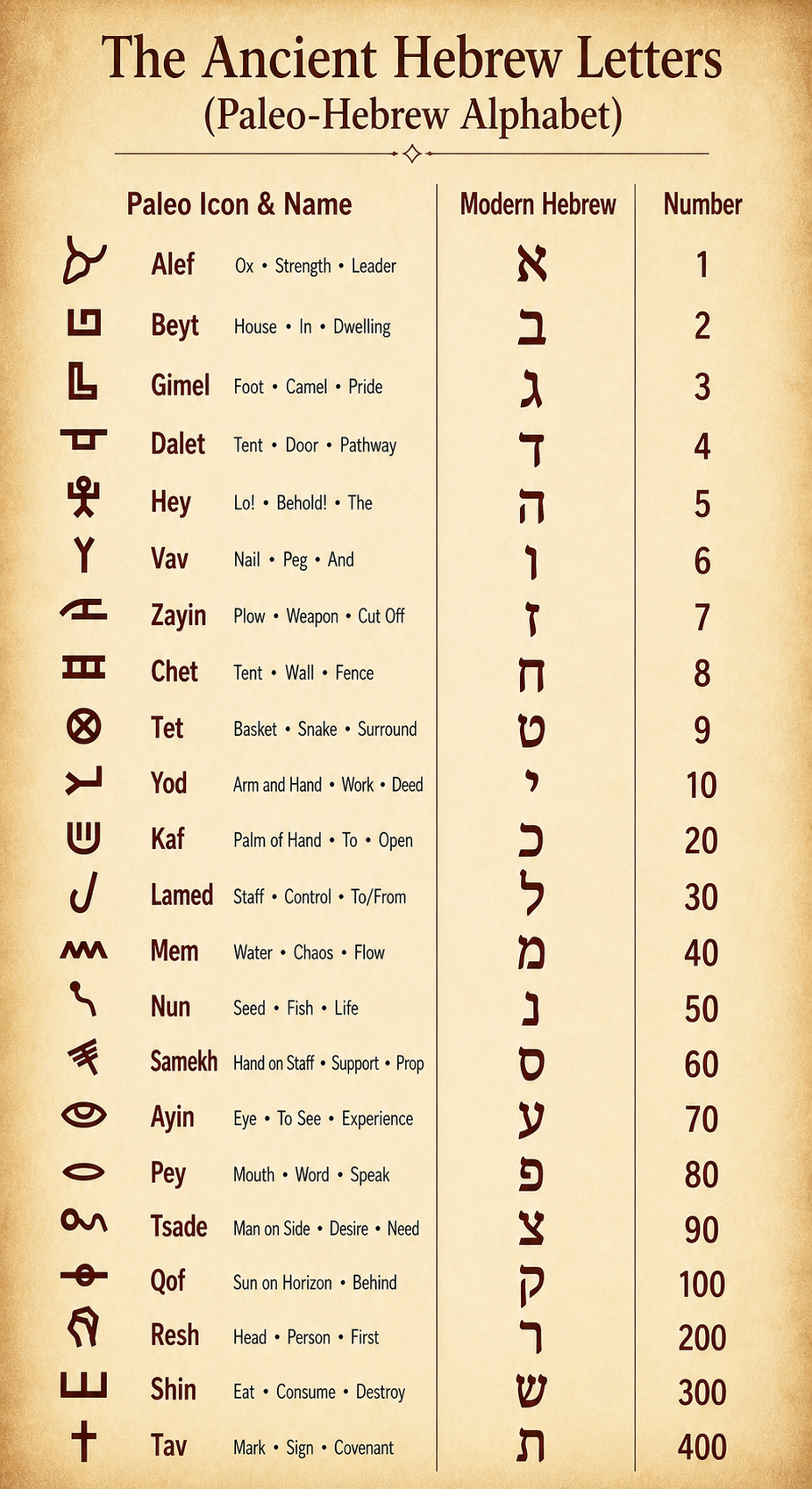
Now let’s see what each of these letters mean from Paleo-Hebrew.

  1. Tet (ט)
    • Symbol: Basket, Snake (coiled up – reeds or snakes)
    • Meanings: Surround
  2. Vav (ו)
    • Symbol: Nail, Peg
    • Meanings: Connect, “And”
  3. Bet (ב)
    • Symbol: House
    • Meanings: “In”

Putting them together:

    Tet (ט) = “Surround” (something enclosed or contained, possibly like goodness surrounding or encompassing)

    Vav (ו) = “Nail, Peg, And” (that which connects or secures)

    Bet (ב) = “House, In” (dwelling, family, inside)

So, in Paleo-Hebrew picture meanings, טוב (good / tov) could be understood as:

“Surrounding + secured connection + inside the house (dwelling).”

Symbolically, this paints the picture of something secure, connected, and enclosed within a house — which gives a sense of goodness, safety, and well-being. In other words, “good” (טוב) in ancient Hebrew can be visualized as:

“What surrounds and secures life inside the house.”

Another beautiful illustration by the imagery of placing fruit into a basket for safekeeping as you walk. The letter Tet (ט), which means “basket” or “surround,” suggests the act of enclosing fruit to protect it from harm, keeping it intact on the journey. Tied with Beyt (ב), symbolizing “house” or “within,” the word “good” embodies the idea of shelter and preservation, just as a basket shields its contents and a house provides refuge. As one walks, the basket holding the fruit offers connection and security, meaning Vav (ו), or “nail/peg”, so nothing is lost or damaged along the way. Therefore, good in its pictographic sense signifies more than moral goodness; it reflects the daily act of caring for what is valuable, ensuring it is surrounded and kept safe within life’s journey. Adam and Eve were placed in the Lord’s Garden, their house, and fully cared for, secure and surrounded by God’s previsions.


Evil

The Hebrew word forevil” is רַע (ra).

It is composed of two letters:

  1. Resh (ר)
    • Symbol: Head
    • Meanings: Person, First, Top, Beginning, Chief
  2. Ayin (ע)
    • Symbol: Eye
    • Meanings: Eye, To See, Experience

Putting it together:

  • Resh (ר) = “The head, a person, leader, beginning”
  • Ayin (ע) = “Eye, to see, experience”

So, in Paleo-Hebrew picture meanings, רע (ra / evil) could be read as:
“The person’s eye / what the person sees and experiences.”

Symbolic Understanding:

  • In the biblical sense, “evil” (רע) isn’t always “moral wickedness” in the modern sense, but rather what is bad, harmful, or brings destruction/misery.
  • With Resh (head/person) + Ayin (eye/experience), it paints a picture of a person led by what they see or experience — meaning following outward appearances or desires, rather than higher spiritual truth.
  • This aligns with the Hebrew worldview: “evil” is often what looks appealing but leads to harm.


Tree of the Knowledge of Good and Evil (Etz HaDa’at Tov va-Ra) in Genesis.

Good, “That which surrounds and secures inside the house” is a picture of protection, order, well-being, and life. Good is what preserves and secures harmony, as if being safe inside a home.

Evil, “A person’s eye/experience” following what one sees and desires. Evil here is not just moral corruption, but that which brings harm through being guided by appearance and self-desire instead of God’s wisdom.

Before Eating from the Tree

Genesis 2:25 says: “Adam and his wife were both naked, and they felt no shame.”

  • Nakedness here symbolizes innocence or ignorance of self-consciousness.
  • They did not yet “see” (Ayin) themselves with judgment or comparison.
  • Their experience (Ra – Ayin) was not driven by appearances; they lived in trustful dependence on God, surrounded (Tet) and secured (Vav) by His provision (Beyt, the “house”).

In other words:
Before eating the fruit, they lived only within God’s definition of good, safe, surrounded, and cared for, without defining reality from their own perspective.

After Eating from the Tree

When they ate from the Tree of the Knowledge of Good and Evil:

  • Their eyes (Ayin) were opened (Gen. 3:7).
  • They suddenly saw themselves and judged their own nakedness.
  • Instead of being surrounded and secured inside God’s “house”, they now relied on their own sight and experience (Ayin-Resh = Ra).

This shift was not simply gaining new information. Rather, it was a change in awareness:
They moved from innocence (trusting God’s perspective) to self-consciousness (judging good/evil through their own eyes).

Nakedness as a Symbol

  • Before eating: Nakedness = innocence, freedom, no shame (they existed in God’s definition of good).
  • After eating: Nakedness = exposure, vulnerability, awareness of self in a broken way (they now define good/evil through appearances).

This shows the Hebrew symbolism:

  • Tov (Good) = security inside God’s order = no shame, peace.
  • Ra (Evil) = the person’s eye/experience = self-judgment, shame, separation.

The Tree of “Good and Evil”

The phrase suggests not just opposites but the full spectrum of human judgment.

  • To “know good and evil” is to define reality for oneself, apart from God.
  • Eating from the tree represents humanity claiming the right to decide for themselves what is good (Tov) and what is evil (Ra), rather than living by God’s word and command.

Before eating from the tree, Adam and Eve were innocent, unshaped by appearances, and secure in God’s good order. After eating, however, their eyes (Ayin) were opened, and they entered into shame, self-awareness, and vulnerability. In doing so, they left God’s definition of good and instead embraced the human judgment of good and evil. They sinned.

Proverbs 21:2 “Every way of a man is right in his own eyes: but the LORD ponders the heart.”


Sin in Greek

The Greek word for Sin is ἁμαρτία (hamartia)

Sin in Greek is ἁμαρτία and means “that which disqualifies one from receiving a portion in the prize” as in “to miss the mark.” It can also mean “to be without a share in” as in being excluded from continued participation, like in an archery competition. You missed the mark so you cannot advance to the next round; you’ve been eliminated.

Psalms 51:5 “Truly, I was formed in evil, and in sin did my mother give me birth.”

Romans 3:23 “For all have sinned and come short of the glory of God.”

When Adam ate the forbidden fruit in disobedience to God, he stepped outside of divine life and allowed sin to enter his very nature. That act corrupted his DNA and killed his spirit (Eph. 2:1), altering the blueprint of his being. Since life is carried through blood and seed (Lev. 17:11), this brokenness was passed to his offspring. Instead of inheriting pure communion with God, every generation received a nature bent away from Him, carrying within their own flesh the consequence of Adam’s disobedience.

After Adam and Eve disobeyed and sin entered their nature, they became disqualified, so God expelled them from the garden so they would not eat from the tree of life and live forever in a corrupted state. As Genesis says, He placed cherubim and a flaming sword to guard the way, protecting humanity from eternal separation by ensuring that redemption, not unending brokenness, would be our future in Jesus.


Sin in Hebrew

In Hebrew it’s the same חטאה “to miss the mark” or to “go astray.”

Here’s חטאה (Chet-Tet-Alef-Heh) broken down:

  1. Chet (ח)
    o Symbol: Fence, Wall, Enclosure
    o Meanings: Boundary, Separation, Protection, Inside/Outside
  2. Tet (ט)
    o Symbol: Basket, Coil, Serpent-like shape
    o Meanings: Hidden, Twisted, Contained
  3. Aleph (א)
    o Symbol: Ox Head
    o Meanings: Strength, Authority, Leader, God, First
  4. Heh (ה)
    o Symbol: Person with arms raised
    o Meanings: Behold, Reveal, Expression, Breath, Worship, Grace


Putting it together:

חטאה (Chet-Tet-Alef-Heh) paints a picture of being outside the fence of protection (Chet), twisted within (Tet), turning from God’s strength and authority (Aleph), and revealing or expressing this break (Heh).

In essence, חטאה shows sin as stepping outside God’s boundary, becoming twisted internally, rejecting His order, and manifesting that rebellion outwardly. It’s not just missing a target accidentally, but a process of moving from God’s protection into self-direction, which becomes revealed in behavior.

God was the first to use this word sin in His conversation with Cain: Genesis 4:7 “If you do well, will you not have honor? and if you do wrong, sin is waiting at the door, desiring to have you, but do not let it be your master.”

Sin, described as both a genetic and spiritual parasite, seeks to dominate human life, yet God’s words to Cain show it can be resisted. When God told him, “sin crouches at the door, its desire is for you, but you must rule over it,” He revealed that while sin is ever-present, waiting like a predator, it is not irresistible. Though inherited through Adam’s nature, sin does not remove human responsibility. God affirmed Cain still had the power to master it, showing that even in a fallen state, choice and obedience to God remain the means of keeping sin from gaining control.

Both Greek and Hebrew words can mean the simplest of mistakes. In English, most people misspell words and without the red squiggly underline to indicate their “sin” they wouldn’t know it. Another example lost driving is a sin – you missed your designated target, that is, “an error” meaning “sin.”

We’re all born in sin but there is hope. John the Baptist declares of Jesus, “…Behold the Lamb of God who takes away the sin (noun) of the world.” John 1:29.

Psalms 91:1 “He who dwells in the secret place [i.e., Jesus] of the Most High will rest in the shadow of the Almighty.”

Through Jesus, we can again be restored in fellowship with God. John 1:29 calls Jesus “the Lamb of God, who takes away the sin of the world,” highlighting His sinlessness of His sacrifice. According to scripture, sin entered the human race through Adam (Rom 5:12), corrupting both our nature and our blood, the very life within us (Lev 17:11). Because life is in the blood, compensation requires the shedding of blood. Jesus, fully human yet without sin, offered His own perfect blood as a substitution for ours. (Rom 5:15) On the cross, His punishment satisfied the justice of God, bearing the consequences that humanity deserved, and demonstrated His love for us. By His death and shed blood, the barrier of sin that passed through our nature and ancestry was broken, making it possible for anyone who believes to be forgiven and restored to communion with God. His blood does not merely cover sin, it removes its penalty and power, providing spiritual life where there was death.

Romans 5:17 “For if, because of one man’s trespass, death reigned through that one man, much more will those who receive the abundance of grace and the free gift of righteousness reign in life through the one man Jesus Christ.”

When a person is sick, they are constantly aware of their condition; every thought, action, and plan is shaded by the sickness. They consider how it limits them, how it might worsen, and how it separates them from normal life. But when they are cured, the sickness no longer dominates their mind; they no longer dwell on what it prevents or threatens. In the same way, Jesus’ payment for Adam’s sin works as a cure for humanity’s spiritual sickness. While sin once dominated every thought and action, His sacrifice removes that burden. Believers are no longer enslaved to the awareness of sin, guilt, or death; they can live in freedom, not constantly conscious of their brokenness, because the debt has been fully paid.

Freedom from the “parasite” of Sin

Hebrews 10:1-2 “For the law, being only a poor copy of the future good things, and not the true image of those things, is never able to make the people who come to the altar every year with the same offerings completely clean. For if this had been possible, would there not have been an end of those offerings, because the worshippers would have been made completely clean and would have been no longer conscious of sins?”

 The scriptures shows that the “power of sin is activated through the law” (Rom 7:8). In Genesis, God commanded Adam, “You shall not eat of the tree of the knowledge of good and evil” (Gen. 2:17). That law revealed Adam’s vulnerability, showing that disobedience brings death, sin crouched at the door (the serpent “seeming to be good”) (Gen. 3:1; Gen. 4:7). Likewise, the Ten Commandments (Exod. 20) outline God’s standards, exposing humanity’s inability to live perfectly and our need for a Savior (Rom. 3:20, Gal. 3:24). In this context, the law is not only a boundary but also a mirror, showing our brokenness and pointing us to Jesus, who restores life and security. In the Paleo-Hebrew understanding of Tov (טוב), being surrounded, secured, and inside God’s “house”, Jesus provides the ultimate Good, placing believers within Himself, harmony, and life, where sin no longer rules.

Romans 8:1-2 “For this cause those who are in Christ Jesus will not be judged as sinners. For the law of the Spirit of life in Christ Jesus has made me free from the law of sin and death.”

Romans 10:13; Joel 2:32 “For whosoever [that’s you and me] shall call upon the name of the Lord shall be saved.”


Posted in Hebrew Gems, Victory Living | Tagged , , , , , , , , | Comments Off on Word Study of Good, Evil, Sin

The Week-After News Report – Scenario

Here’s a hypothetical news report after the the shortening of the day and the night of Revelation 8:12. The sun, moon, and stars are physical, the day and the night are time based. 

The Earth Sped Up: Aftermath Analysis

Moments after the cosmic event, seismographs and atomic clocks worldwide recorded an unprecedented anomaly. The length of the day abruptly shrank from the familiar 24 hours to just shy of 16 hours, a third of the day vanished with terrifying suddenness.

Astrophysics conclude: a Cosmic Slingshot

A rogue asteroid, on a trajectory that had long eluded detection, was gravitationally captured by a “gravity well” anomaly in Earth’s upper atmosphere, a phenomenon only possible with a yet-unreported form of artificial black hole, possibly seeded by high-energy particle collisions in recent human experiments. This minuscule black hole, once thought too small to be of consequence, had been orbiting at high velocity until it encountered the asteroid, drawing it irresistibly earthward.

The Impact

The black hole, fused with the asteroid, struck Earth’s equatorial bulge. The asteroid, superheated and accelerated by the black hole’s orbit, delivered an impact at triple the velocity of a conventional rock of its size, dumping not just kinetic but bizarre, high-density gravitational energy into the crust. Multiple satellites orbiting above the equator observed the crust shudder, ripple, and unprecedentedly spin faster, like a massive cosmic skater pulling in their arms.

Angular Momentum Transfer

The collision wasn’t just a hit; it imparted massive angular momentum, precisely aligned with the planet’s rotation. Scientists likened the effect to attaching a planetary-scale rocket to the equator and lighting the fuse: the acceleration of Earth’s spin began.

Geophysical and Atmospheric Upheaval

Massive earthquakes circled the globe as tectonic plates snapped under new rotational stress. The increase in centrifugal force at the equator displaced oceans, flooding continental lowlands and leaving former seas as vast, shallow basins. The redistribution of water mass and a reduction in effective gravity at the equator further allowed some ocean mass to escape into the atmosphere, especially where tectonic rifts had been torn open.

Such sudden acceleration also perturbed the core, driving electromagnetic chaos and causing aurora to appear at the equator.

The Human Toll

Billions perished. The sudden environmental catastrophe, darkness, and days one-third shorter than before, decimated populations. Survivors, the rarest of the rare, emerged into an unfamiliar, rapidly spinning world.

Physicists Explain

If you could attach gigantic rocket engines at the equator and power them for centuries, you might slowly achieve a similar effect, hypothetically “pulling” the Earth faster along its rotation.

Ancient theories involved shifting the mass of the oceans or repositioning the Moon for tidal acceleration, but never at this rapid pace. Only the perfect, catastrophic combination, a gravitational anomaly (mini black hole acting as a cosmic lure and accelerator) and a massive impact-aligned asteroid could account for the speed and scale observed.

Conclusion

Once the domain of science fiction, a scenario once considered “wild conjecture” became devastating reality. The swift aligned transfer of colossal angular momentum by a black hole-accelerated asteroid, something unthinkable outside theoretical astrophysics, now stands as the leading scientific explanation for the event that forever changed the rhythm of life on Earth.


References

  • Revelation 8:12
  • Isaiah 24:20
  • Revelation 16:20
  • Isaiah 13:12
  • Revelation 21:1
  • Matthew 24:22
  • Mark 13:20
Posted in End Times | Tagged , , , , , , | Comments Off on The Week-After News Report – Scenario

The Link between Word, Thing, Bee, and Wilderness

I have a deep desire to keep learning from the word of God. While many have explored the Greek term Logos, I haven’t seen as much attention given to its Hebrew counterpart. This brief study looks at the rich connections tied to the Hebrew word Dabar. I hope you find it meaningful.

Posted in Hebrew Gems | Tagged , | Comments Off on The Link between Word, Thing, Bee, and Wilderness

A Worm

Psalms 22:6

​But I am a worm, and no man; a reproach of men, and despised by the people.

Everything in the Scriptures points to Jesus. As an English speaker, when I read the word “worm,” I tend to think of a maggot or earthworm. However, that’s not the intended meaning, which is why it’s so important to go back to the original languages of Scripture with a reliable dictionary.

The Hebrew word תולע (worm – towla) appears 43 times in Scripture and means “worm, scarlet stuff, crimson.” This worm is a small creature (“coccus ilicis”), about the size of a ladybug. See the Science section below. One of these uses is found in Isaiah 1:18, where the LORD says, “Come now, and let us reason together… Though your sins be as scarlet, they shall be as white as snow, though they be red like crimson, they shall be as wool.”

Faith in Greek means to have a conviction of a belief, to be persuaded. God always said, “come now, and let us reason together…” that is, to be persuaded through information.

Psalm 22 is a Messianic psalm. Jesus quoted its first line on the cross (Matthew 27:46, Mark 15:34): “My God, my God, why have you forsaken me?” This was not a cry of despair, but a deliberate reference to the entire psalm, which describes a righteous sufferer enduring mockery and physical agony, images that mirror the crucifixion (Psalm 22:7–8, 16–18). Before chapter and verse numbers were added in 1227 AD, quoting the opening line was the common way to reference a whole passage. Jesus was pointing to Psalm 22 as a prophetic fulfillment of His suffering, not expressing actual abandonment, as God had promised never to forsake His own (Deuteronomy 31:6, Hebrews 13:5).

The letter meanings (see below) for the word תולע declare:

    “A covenant secured by a nail that guides through understanding.”

In the context of towlameaning scarlet worm, this layered clarification is profound. The scarlet worm (coccus ilicis) clings to wood, dies, staining the wood which it was attached. Scripturally, the worm symbolizes Jesus, Whose blood brings a new covenant (Exodus 24:8; Jeremiah 31:31) (Tav – ת ), secured by the nails (Vav – ו), who teaches and leads (Lamed – ל), and who reveals truth and salvation to those with eyes to see (Ayin – ע)( Matthew 11:15). The conclusion: “A covenant secured by a nail that guides through understanding.” Fulfilling Isaiah 1:18!

The root of towlaʿ is the Hebrew verb yalʿa (ילע), meaning “to speak rashly, talk wildly, to swallow.” It appears only once in Proverbs 20:25: “It is a snare to a man to make a rash dedication, and only later to consider his vows.”

Jesus, sent by the Father, did not make a rash vow, He fulfilled it completely. As written in Ecclesiastes 5:4–5, Numbers 30:2, and Deuteronomy 23:21, a vow must be honored. Jesus gave Himself willingly, shedding His blood on a tree and becoming a curse for us (Deuteronomy 21:23, Galatians 3:13), so that we who were under the curse might be free and receive blessings. As Paul wrote in 2 Corinthians 5:21, “He who knew no sin became sin for us, so that in Him we might become the righteousness of God.”

Additionally, it is also reflected in Psalm 57:3, “He shall send from heaven and save me from the reproach of him that would swallow me up. Selah. God shall send forth His mercy and His truth,” and in Jesus’ words in John 6:38, “For I have come down from heaven, not to do my own will, but the will of Him who sent me.”

Indeed, the world called Jesus crazy. Mark 3:21 says His own people thought He was “out of His mind,” and John 10:20 records, “Many of them said, ‘He has a demon and is mad, why do you listen to Him?’” Many departed from following Him after He said in John 6:53–56 “Jesus therefore said to them, “Most certainly I tell you, unless you eat the flesh of the Son of Man and drink his blood, you don’t have life in yourselves. He who eats my flesh and drinks my blood has eternal life, and I will raise him up at the last day. For my flesh is food indeed, and my blood is drink indeed. He who eats my flesh and drinks my blood lives in me, and I in him. “

“Eat My flesh” and “drink My blood”

This is not about literal cannibalism, but about receiving Jesus fully, believing in Him as the true source of life. Just as food and drink sustain the body, Christ alone sustains the soul. To “eat” His flesh and “drink” His blood is to internalize His sacrifice, to accept by faith (being persuaded) that His death and resurrection are necessary for eternal life.

Participation in His Life and Death

Jesus is offering Himself as the bread of life (John 6:35). Eating His flesh means embracing the truth that His body was broken for our sins. Drinking His blood signifies accepting the new covenant made through His blood (Matthew 26:28). It’s about entering into His death so that we may also live through His resurrection. (Romans 6:4-5)

Ongoing Relationship, Not a One-Time Act

The verbs used in Greek are continuous, suggesting an ongoing, abiding relationship. Jesus says in John 6:56, “He that eats my flesh, and drinks my blood, dwells in me, and I in him.” This is about constant fellowship, sustained by continual trust and fellowship with Him.

To eat His flesh and drink His blood means to believe in Jesus fully, to accept His sacrifice as your own, and to live in daily dependence on Him. It is a picture of complete spiritual union, Christ in you, and you in Christ. (John 6:56)

Letter Meanings

Word: תולע (Tav, Vav, Lamed, Ayin)

1. ת (Tav) Meaning: Mark, sign, covenant, seal
Symbolism: Tav is the last letter of the Hebrew alphabet, often representing completion, truth, or a sign of the covenant.

2. ו (Vav) Meaning: Hook, connection, nail
Symbolism: Vav joins things together, often seen as a connector, peg, or nail, it symbolizes binding, continuity, or a connection between heaven and earth.

3. ל (Lamed) Meaning: Staff, goad, authority, teach
Symbolism: Lamed is associated with instruction, leadership, or urging forward, like a shepherd’s staff guiding sheep.

4. ע (Ayin) Meaning: Eye, insight, to see
Symbolism: Ayin represents vision, perception, or understanding, both physical and spiritual.

Science

The worm “coccus ilicis” ++++  When the female of the scarlet worm species was ready to give birth to her young, she would attach her body to the trunk of a tree, fixing herself so firmly and permanently that she would never leave again. The eggs deposited beneath her body were thus protected until the larvae were hatched and able to enter their own life cycle. As the mother died, the crimson fluid stained her body and the surrounding wood. From the dead bodies of such female scarlet worms, the commercial scarlet dyes of antiquity were extracted.  What a picture this gives of Christ, dying on the tree, shedding His precious blood that He might “bring many sons unto glory.” Hebrews 2:10.

(from page 73, “Biblical Basis for Modern Science”, 1985,  Baker Book House, by Henry Morris)

https://www.azerbaijanrugs.com/arfp-natural_dyes_insect_dyes.htm

Spodek, Malkie & Ben-Dov, Yair. (2012). Morphology of the first-instar nymph and adult female of Kermes echinatus Balachowsky, with a comparison to K. vermilio Planchon (Hemiptera, Coccoidea, Kermesidae). ZooKeys. 246. 11-26. 10.3897/zookeys.246.3766. https://www.researchgate.net/figure/Kermes-echinatus-Balachowsky-first-instar-nymph-general-appearance_fig6_234012357

Posted in Hebrew Gems, Victory Living | Tagged , , , , , , | Comments Off on A Worm

Understanding ἁρπάζω in 1 Thessalonians 4:17

Introduction

Imagine hearing a word that carries the thrill of a sudden, powerful action—like being whisked away in an instant. In the Bible, the Greek word ἁρπάζω (pronounced “har-PAD-zo”) captures this kind of excitement. It appears in 1 Thessalonians 4:17, describing a dramatic moment when believers are “caught up” to meet Jesus. This essay explores what ἁρπάζω means in the New Testament, how it shapes the event described in 1 Thessalonians, when this event might happen, and what it looks like through examples you can relate to—all based on scripture alone.

Meaning of ἁρπάζω

To understand ἁρπάζω, let’s look at how it’s used in the New Testament. The word appears 13 times and often describes a forceful or sudden taking. For example, in Matthew 11:12, Jesus says, “The kingdom of heaven suffereth violence, and the violent take it by force” (KJV). Here, ἁρπάζω suggests seizing something eagerly, like grabbing a prize. In John 10:28-29, Jesus says no one can “pluck” (ἁρπάζω) His sheep from His hand, implying a strong attempt to snatch something away. In Acts 8:39, after Philip baptizes the Ethiopian, “the Spirit of the Lord caught away (ἁρπάζω) Philip,” showing a sudden, divine act of removal. These verses show ἁρπάζω means a swift, forceful action, like grabbing or being swept away unexpectedly.

The Event in 1 Thessalonians 4:17

In 1 Thessalonians 4:17, Paul writes, “Then we which are alive and remain shall be caught up (ἁρπάζω) together with them in the clouds, to meet the Lord in the air: and so shall we ever be with the Lord” (KJV). Here, ἁρπάζω describes believers being suddenly taken upward to meet Jesus. The context (1 Thessalonians 4:13-18) explains that this happens after the dead in Christ rise first, at the sound of a trumpet and the Lord’s descent from heaven. This event, often called the “Rapture” (from the Latin for “caught up”), is a moment of victory for believers, uniting them with Jesus forever. The use of ἁρπάζω emphasizes the speed and divine power of this moment—like being instantly lifted from earth to heaven.

When Might This Happen?

Scripture doesn’t give an exact date for this event, but it offers clues about its timing. In 1 Thessalonians 5:2, Paul says, “The day of the Lord so cometh as a thief in the night” (KJV), suggesting it will be sudden and unexpected. Matthew 24:36 reinforces this: “But of that day and hour knoweth no man, no, not the angels of heaven, but my Father only” (KJV). This unpredictability is echoed in Matthew 24:43-44, where Jesus compares His coming to a thief, urging readiness. In 1 Corinthians 15:51-52, Paul describes a similar event: “We shall all be changed, in a moment, in the twinkling of an eye, at the last trump” (KJV). These passages point to a future, sudden event tied to Christ’s return, but its timing remains a mystery, meant to keep believers alert and faithful.

Examples for Understanding

To help you picture ἁρπάζω in 1 Thessalonians 4:17, think of these scenarios:

  1. The Soccer Game Snatch: Imagine you’re at a soccer game, and your team scores the winning goal. Suddenly, your best friend grabs your arm and pulls you from the stands to join the team’s victory celebration on the field. You didn’t expect it, but in a flash, you’re swept up into the excitement. That’s like ἁρπάζω—God suddenly pulling believers to join Jesus in the air, full of joy.
  2. The Surprise Field Trip: Picture you’re in class, bored with math, when your teacher announces a surprise field trip. Before you know it, you’re whisked out of the classroom onto a bus headed to an amusement park. The sudden shift from routine to adventure mirrors how ἁρπάζω describes believers being quickly taken to meet Jesus in a thrilling moment.

Conclusion

The Greek word ἁρπάζω in 1 Thessalonians 4:17 paints a vivid picture of a sudden, powerful act where believers are caught up to meet Jesus in the air. Its use across the New Testament shows it means a swift, forceful taking, fitting the dramatic event Paul describes. This “Rapture” is a hopeful promise for believers, uniting them with Christ forever, though its timing remains unknown, urging us to stay ready. Through examples like a friend pulling you into a celebration or a surprise trip, we can grasp the excitement and speed of this moment. As 1 Thessalonians 4:18 says, “Wherefore comfort one another with these words” (KJV)—this event is a source of hope, reminding us of God’s plan to bring us to Him.

Posted in End Times, Victory Living | Tagged , , , , , , , , , , , , | Comments Off on Understanding ἁρπάζω in 1 Thessalonians 4:17